
 Deutsch
 Français
 日本語
日本語 Español
 Italiano
 Русский
 繁體中文
繁體中文 한국어
한국어
Steel is an iron alloy containing multiple alloying elements. Those include carbon, manganese, chromium, and more. Iron makes over 95% of these materials. However, one aspect that confuses people is the melting point of steel. As I said earlier, steel is an alloy, which leads people to think it can melt at very high temperatures.
Steel materials don’t have a specific or fixed melting point. Instead, it can melt at temperatures around 1380°C to 1530°C. This range of temperatures is due to the different types of steel. Each of those types has a different composition that alters its melting point. In this article, I will explain everything about steel and its melting temperature.
What Is the Melting Point of Steel?

Before discussing the temperature at which steel melts, let’s have a quick overview of what the melting point is!
The melting point is the temperature at which a material melts, or the range of temperatures at which it melts. In simple words, materials change their physical state from solid to liquid. This melting point can be either a fixed temperature or a temperature range, depending on the object’s melting behavior.
As you know, solid materials have a strong structure. All the atoms in the materials are firmly packed together. However, when we heat material (steel), its atoms start to vibrate and move. But if we keep increasing the temperature, there comes a time when all the atoms become loose. Eventually, they start to move freely, and this is when the solid material begins to melt.
Some materials have loosely packed atoms that move quickly even at lower temperatures. As a result, that specific material has a lower melting point and vice versa. Let’s now look at the steel’s melting point.
The melting point of steel ranges from 1380 to 1510 degrees Celsius. There is no fixed melting point of steel since it is an alloy. The proportion of each alloy element can affect the melting point of steel. However, all types of steel will melt when the temperature reaches up to 1500 degrees Celsius.
It is noteworthy that each steel type has a different melting point. This is due to differences in the composition of the steel types. However, they all consist of almost the same alloy elements. However, the proportions of these alloy elements in each steel type determine their melting points. I generally consider steel to have a bit higher melting point than many other metals.
Why does Steel have a Higher Melting Point?
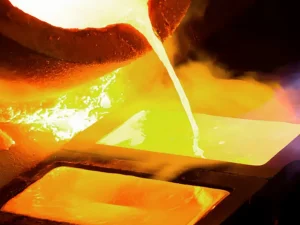
Many metals and metallic alloys have melting points below 1000 degrees Celsius. However, steel has its melting range around 1500 degrees Celsius. What makes steel strong and increases its melting point? The main reason for steel’s higher melting point lies in its atomic packing. Steel is one of those materials whose atoms are firmly bonded together.
The metallic bond between these steel atoms is very strong, making steel exceptionally robust. Breaking this bond between the atoms is very difficult. Additionally, steel atoms form a crystal lattice. This structure arranges atoms in a particular way, further increasing their strength. To break the bond between these atoms, a high amount of energy is needed. As a result, steel has a higher melting point than many other metals.
Remember, the energy required to break bonds between atoms is supplied as heat. Providing a higher temperature (heat) provides more energy to break atomic bonds. When this temperature reaches around 1500 degrees, the atoms’ bonds break. If the temperatures remain below this range, steel atoms are exposed to less energy.
As a result, their bonds don’t break, and they don’t move freely. That’s the primary reason steel has a higher melting point. In many other metals, their atoms are loosely held together. So, their bonds are broken easily, even at low temperatures. As a result, the melting points of those metals remain on the lower side.
However, atoms in steel require more energy (heat) so their bonds break and they move freely. As a result, steel has a very high melting point. As I said earlier, the steel melting point is not fixed, but has a range. This is because steel contains many alloying elements, such as carbon, manganese, and others. Those alloy elements introduce variation, resulting in a range of melting points rather than a single one.
Melting Point of Different Types of Steel
As I said earlier, steel is an alloy composed of various alloying elements. Their names include iron, carbon, chromium, and manganese, among others. However, the proportions of these elements vary, resulting in different types of steel. The melting points of those steels differ slightly due to slight differences in composition. Some popular types of steels are as follows:
- Tool steel
- Alloy Steel
- Carbon Steel
- Stainless Steel
Carbon steel and stainless steel are the two most used steel types. Carbon steel further has three types that differ in their carbon content. Their names are as follows:
- Low carbon steel
- Medium carbon steel
- High carbon steel type
Stainless steel is another popular type of steel. This type is unique for its 10.5% chromium content, which makes it highly corrosion-resistant. It is noteworthy that stainless steel also comes in different grades, such as 304 and 316. The melting point of stainless steel is slightly lower than that of other steel types.
This is due to the presence of chromium, which reduces the melting point of these steel types. Interestingly, the melting points of these steel types differ. Here is a table showing the melting points of these types:
| Type of Steel | Melting Point (°C) |
| Low-Carbon Steel (Mild Steel) | 1450–1510°C |
| Medium-Carbon Steel | 1400–1450°C |
| High-Carbon Steel | 1370–1500°C |
| Alloy Steel | 1380–1500°C |
| Tool Steel | 1300–1450°C |
| 304 Stainless Steel | 1400–1450°C |
| 316 Stainless Steel | 1375–1400°C |
| Cast Steel | 1370–1500°C |
Factors that Affect the Melting Point of Steel
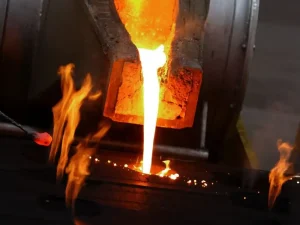
As I said earlier, multiple factors influence steel’s melting point. As a result, some steel types have higher melting points, while others have lower ones. In the section below, I will discuss key factors that affect the melting point of materials.
1- Alloying Elements
First of all, the alloy element highly influences the melting point of steel. Remember, steel is not a standalone material; it contains various alloying elements. Steel with higher chromium and carbon content will have a slightly lower melting point, and vice versa. If steel contains an alloy element with a higher melting point, the steel’s melting point will increase as well. The type of alloying element present in steel is crucial in determining its melting point.
2- Impurities Present in Steel
During production, some impurities are mixed into the molten metal. These impurities can also affect the melting point of steel. For example, imagine a small amount of tungsten mixed with steel during manufacturing. This small impurity will raise the steel’s melting point. On the other hand, a small amount of carbon present as an impurity in steel would reduce the steel’s melting point.
3- Pressure Condition
The impact pressure is significant on the melting point regardless of which metal you’re talking about. In fact, I discussed these factors in a previous article on aluminum’s melting point. When the pressure is high, the atoms in steel come very close together and pack closely together. So, breaking their bonding requires more energy (heat). As a result, the material’s (steel’s) melting point increases. Remember, this case is true when steel is exposed to very high pressure. Normal pressure (slightly elevated) won’t affect the steel’s melting point.
4- Presence of Residual Stresses
As you know, CNC machining of steel is very common. In fact, this material undergoes different types of machining. During machining, the steel parts develop internal stresses, which weaken them. As these parts weaken, they can melt at a slightly lower melting point. Remember, this residual stress only occurs in machined parts. Steel without machining has no internal stress, and its melting point remains unaltered.
Why Is the Melting Point of Steel Important?
Knowing the melting point of steel is of utmost importance. Why? That’s because a single melting point provides a lot of information about steel, helping us use it correctly. Confused? For example, When you know the melting point, you actually understand the steel’s heat resistance.
This allows you to use it in applications or make products that are not used at high temperatures (over 1500 degrees Celsius). Imagine you use steel to make a part that operates at very high temperatures. In such a case, your product will eventually fail as that high temperature will melt it. Welding is another critical process for joining two pieces. Right?
If you don’t know the melting point of steel, you won’t be able to weld it perfectly. You might end up providing very high or very low temperatures during welding. As a result, there won’t be a strong weld on steel pieces. In the long run, the weld will deteriorate and wear out. In short, knowing a steel’s melting point helps us use it safely and correctly.
Frequently Asked Questions
At what temperature does steel melt?
Steel has a melting point of around 1380-1510 degrees Celsius. All types of steel will melt at temperatures in this range. There is no fixed melting point for steel because it contains different proportions of alloying elements.
Does steel melt at 1000 degrees?
No. None of the types of steel will melt at 1000 degrees Celsius. Instead, the steel will show signs of melting when the temperature crosses 1380 degrees Celsius. However, at 1000 degrees Celsius, you will experience deterioration or softness on the surface of steel.
Conclusion
Steel is one of those materials used across different industries. From construction to automobiles, steel has a dominant presence in every industry. However, many people have no idea what the melting point of steel is. Knowing the melting point of this material is very important. Why? If you don’t know their melting points, you won’t know the proper use case for these materials. In this article, I discuss everything about the melting point of steel and the factors that affect it.