
 Deutsch
 Français
 日本語
 Español
 Italiano
 Русский
 繁體中文
 한국어

When working with metal or mechanical parts, bolts and screws are often used to hold things together. Have you ever wondered how bolts fit so perfectly into metal parts? The answer lies in threads. For a bolt to fit properly, the hole must have matching internal threads. One of the most commonly used thread types is 3/8-16. If you are a beginner, terms like tap drill size and 3/8-16 can sound technical. No need to worry! This guide to the 3/8 16 tap drill size will explain everything about 3/8-16 and drill size in the simplest possible way. So let’s get started!
What is a 3/8-16 Thread?

Let’s first understand what a 3/8-16 thread is!
A 3/8-16 thread is a standard type of screw thread used for bolts and fasteners. The number 3/8 indicates the bolt’s diameter, which is 3/8 inch. The number 16 means 16 threads per inch on the bolt. Together, 3/8-16 describes the size and spacing of the threads.
In simple terms, 3/8-16 is an inch-based (imperial) coarse thread. But what does coarse mean? Actually, “coarse” means the threads are slightly wider (higher pitch). In other words, the threads are spaced farther apart compared to fine threads. This coarse design makes the 3/8-16 thread easier to install and less likely to break.
What is a Tap Drill Size?
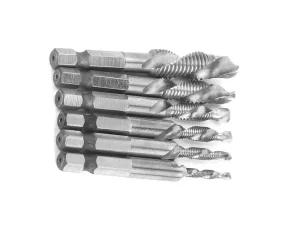
Now, let’s try to understand a tap drill size!
A tap drill size is the hole size drilled before cutting threads into it. When making internal threads, you do not drill the hole to the same size as the bolt. Instead, you drill a slightly smaller hole so the tap can cut threads into the material.
Simply put, the tap drill size prepares the hole for threading. Let me explain it more easily. You must have seen a nut and bolt. The bolt has spiral lines called threads. For a bolt to go into a metal part, the hole in that metal must also have the same spiral lines inside.
Now, you cannot make threads on a metal part just by drilling a hole. Why? Because drilling only makes a smooth, round hole. To create threads inside the hole, you need a tap. The tap drill size is simply the size of the hole you drill first, before using the tap.
Can we drill a hole the same size as the bolt?
The answer is no! You cannot drill a hole the same size as a bolt. The reason is that there won’t be enough material left for the tap to cut into. The bolt will not grip anything. Hence, you have to drill the hole slightly smaller than the bolt diameter. This slight difference allows the tap to cut grooves (threads) inside the hole.
What is the Standard Tap Drill Size for 3/8-16?
Now I said above that the tap drill size must be smaller than the bolt size. Here, you’re probably wondering what the standard tap drill size is for 3/8-16. The answer is that the standard tap drill size for 3/8-16 is 5/16 inch (0.3125 inches). It means that before cutting threads, you first drill a 5/16-inch hole in the material.
This hole is slightly smaller than the 3/8-inch bolt. As a result, it leaves enough metal inside the hole for the tap to cut proper threads. Using a 5/16-inch drill bit makes tapping easier and safer, especially for beginners. This standard tap drill size also helps the tap cut smooth and strong threads without breaking or getting stuck.
Why Correct Tap Drill Size Matters?
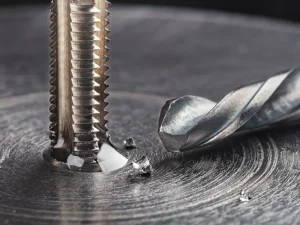
Choosing the correct tap drill size is very important for making good-quality threads. The tap drill size decides how easily the tap cuts threads and how strong those threads will be. Let’s discuss two conditions that will clarify why the correct drill size matters.
What If the Hole Is Too Small?
If the drilled hole is too small, the tap has to remove too much metal. This makes tapping very hard and increases the chance of the tap getting stuck or breaking. Furthermore, with a hole that’s too small, the final thread’s quality will also be affected. It will look rough, and you will need more force to turn the tap inside to create a thread.
What If the Hole Is Too Large?
On the flip side, if the drilled hole is too large, the tap cannot cut deep threads. As a result, the threads become shallow and weak. The bolt will not hold tightly in this thread and might feel loose. This can cause the bolt to slip under heavy loads, leaving the final joint weak.
Types of Taps Used for 3/8-16 Threads
When cutting 3/8-16 threads, you can use different types of taps. Each of those tap types has a unique purpose and design. That’s why understanding the type of tap is crucial to choosing the right one for your work. Here are the three main types of taps used for 3/8-16 threads.
1- Taper Tap
A taper tap is a type of tap with a gradually sloping tip. With this gentle slope, you can easily start cutting threads in a drilled hole. How? When you use a taper tap to cut threads, it cuts them gradually rather than all at once. As a result, there is very little chance that a tap drill will get stuck in the metal. Taper taps are usually used for through-holes or for starting threads by hand. They are an ideal choice when you need to create threads in a new hole. The slow start allows you to control the tap more effectively and produce clean, accurate threads.
2- Plug Tap
A plug tap is a type of tap with a shorter, less-sloping tip than a taper tap. It means it can cut threads faster. However, what I don’t like about a plug tap is that it is a little harder to start in a new hole. That’s why you can use a plug tap after a taper tap has started the threads. You can proceed with threading with a plug tap. Plug taps are standard for general-purpose work. These taps work well for both through-holes and blind holes.
3- Bottoming Tap
A bottoming tap is a special tap type with almost no taper at the tip (a flat tip). This flat-tipped design allows the bottoming tap to cut threads to the bottom of a blind hole. That’s why bottoming taps are usually used when you need full-depth threads in a hole that does not go all the way through. Moreover, the bottoming tap cannot start threads on its own in a new hole. First, you have to begin threading with the help of a taper tap. Once the thread is started, you can use a bottoming tap to finish the hole to full depth.
How to Tap a 3/8-16 Hole?: Step-by-Step Process
Tapping a 3/8-16 hole might sound tricky at first. But if you have the right tools and know how to use the basic tools, you can create a 3/8-16 hole easily. Here are a few steps you must follow when tapping a 3/8-16 hole.
Step 1: Mark & Drill the Hole
The first step in tapping a 3/8-16 hole is marking and drilling the hole. If you make a mistake in this step, the entire thread size will be affected. First, mark the exact location where you want the hole. For marking, I recommend using a center punch and tapping it lightly with a hammer. This will make a dent in the metal surface, and it will not only guide you later but also prevent the drill bit from slipping.
Next, select the correct drill bit: 5/16 inch for a 3/8-16 thread. This drill bit size is slightly smaller than the bolt because the tap needs metal to cut into for the threads. So, hold the drill straight, perpendicular to the surface. However, when drilling, apply moderate pressure, drill slowly, and do not force it.
Step 2: Apply Cutting Oil
Now that you have drilled the hole, the next step is to apply cutting oil before tapping. But why do we use cutting oil? The reason is that it reduces friction, cools the metal, and helps the tap cut threads smoothly. Without oil, the tap can get stuck, overheat, or even break. To use cutting oil, simply apply a few drops directly into the drilled hole. Another way to apply cutting oil is to coat the tap with it. As you turn the tap, the oil spreads along the threads. This will make the threading process cleaner and easier.
You can use the following cutting oil to tap a 3/8-16 hole:
- General-Purpose Cutting Oil (Best for aluminum)
- Sulfurized or chlorinated cutting oil
- WD-40 or multi-purpose lubricants
Step 3: Start Tapping the Hole
Once the hole is drilled and cutting oil is applied, it’s time to start tapping the 3/8-16 hole. This is where the tap begins cutting threads into the metal. So first, insert the tap straight into the drilled hole. However, at this point, make sure that the tap is perfectly vertical. Why? Because if the tap is tilted, the threads will not line up correctly, and the bolt may not fit. So, start turning the tap clockwise slowly.
After turning half a rotation forward, turn it slightly backward. This backward motion removes the chips from the metal. Sometimes, these chips can get stuck in the hole if they are not cleared. For this, again turn the tap a little forward (clockwise) to cut threads and then turn it slightly backward (counterclockwise). This continuous back-and-forth motion removes the chips from the metal (thread formation) and clears them from the hole. At the end, you will get the desired thread size (a 3/8-16 hole) in the metal.
Step 4: Complete & Clean the Threads
After you have carefully tapped the hole, the final step is to finish and clear it. Slowly continue turning the tap until the threads are entirely cut to the required depth. Once done, remove the tap carefully. Next, clean the hole by removing all metal chips or debris. For this, you can use a small brush, compressed air, or even a cloth. However, I suggest you not forget to wear gloves, as sharp chips can injure you.
How to Check Thread Quality After Tapping?
Once you have created a 3/8-16 hole, it is time to check the thread quality. There are two effective methods for checking thread quality. Let’s discuss them here!
1- Test with a Bolt
The simplest way to check the quality of a tapped hole is through an actual bolt that matches the threads. Now that you have created a 3/8-16 hole, insert a 3/8-16 bolt and gently screw it in. If the threads you created are cut correctly, the bolt will go in smoothly without forcing it. You will be able to turn the bolt easily for several rotations without feeling any resistance.
However, if the bolt feels too loose, it means the thread is not deep enough, or the hole is too wide. If so, you might need to create a new thread. On the other hand, if you feel the bolt is not going into the hole or is getting stuck, it means the hole is too small. To solve this issue, you have to make the thread wider. I also suggest checking for any metal chips left inside.
2- Test with Thread Gauge
Another effective way to check thread quality is by using a thread gauge. It is a scientific tool designed to accurately measure the size and pitch of threads. It comes with several markings for different thread sizes. Since you created a 3/8-16 hole, you need to choose a gauge with a 3/8-16 marking. After that, gently insert it into the hole.
If it slides in smoothly and follows the threads evenly, the threads are correctly cut. If the gauge does not fit properly or feels too loose or too tight, it indicates that the threads are either too shallow, too deep, or uneven. Checking with a gauge is the most precise way. However, for beginners, it will need slight practice.
Frequently Asked Questions
Can I tap without drilling?
No, you cannot tap a hole without drilling first. Drilling creates a smooth hole for the tap to cut threads into. Without a pre-drilled hole, the tap would have to remove too much metal at once. This can break the tap and damage the metal.
Is 3/8-16 a coarse or fine thread?
As I mentioned above, the 3/8-16 thread is coarse. Usually, coarse threads have fewer threads per inch (16 in this case). This design makes them stronger, easier to install, and less likely to strip.
Is tapping stainless steel difficult?
Yes, tapping stainless steel can be more challenging than softer metals like aluminum. The reason is that stainless steel is harder. As a result, the tap has to cut through more material. This can cause more friction, heat, or even tap breakage.
Conclusion
Tapping a 3/8-16 hole may seem tricky at first. This is due to technical terminology like “drill size” and “number 3/8-16.” However, in this article, I have discussed the 3/8-16 tap drill size in the simplest terms. The 3/8-16 is an inch-based coarse thread. But the tap drill size refers to the hole created before threading. To tap a 3/8-16 thread, there are a few steps you must carefully follow.
Moreover, the right size of the tap also matters a lot. Usually, the standard tap drill size is 5/16 inch. This is slightly smaller than the bolt size, allowing the tap to cut threads. Moreover, there are a few types of thread. Choosing the right tap type is crucial for high-end results. In the end, after you have made the thread, it is essential to check its quality to prevent future failures. For this, I recommend using a gauge or testing with the actual bolt size.