
 Deutsch
 Français
 日本語
日本語 Español
 Italiano
 Русский
 繁體中文
繁體中文 한국어
한국어
Manufacturing industries heavily rely on different machines to cut and shape metal pieces. They make a wide range of products, including bolts, gears, and engines. That’s why this Metal Machining 101 guide is essential. As you know, metals are one of the most essential raw materials used in making different products.
Their strength, durability, and performance set them apart from other raw materials. From automobiles to aerospace and construction, metal products are everywhere. Metal machining handles a wide range of metals—stainless steel, aluminum, copper, and more. In this article, I’ll cover the basics of metal machining. So, let’s dive in!
What is Metal Machining?

Metal machining involves the use of cutters to cut, shape, and make different products. This process uses the raw material, such as solid metal pieces, i.e., rods, bars, or blocks. The machines used in this process are highly advanced and automated. So, they cut the metal piece precisely and make a product of accurate shape.
Of course, there are many different manufacturing processes. Some of these involve melting the workpiece at high temperatures. Those processes are less cost-effective and require high energy. However, metal machining is very affordable compared to many other manufacturing processes. It requires far less energy as cutting tools remove material from the workpiece to create different products.
In the past, machines were manual and needed more human involvement. However, things have changed due to the invention of automated machines. Modern CNC-based machines cut and shape workpieces as per computerized instructions. This reduces the chances of errors, making metal machining exceptionally precise and fast.
So, you get machined parts with tight tolerances. Metal machining isn’t limited to certain materials. In fact, it’s highly flexible when it comes to material compatibility. This means it can handle almost any type of metal, whether it’s soft or hard. The machines used in this process are very powerful and equipped with sharp cutting tools. That said, they can be a bit slow when cutting extremely hard materials.
Types of Metal Machining
Metal machining has different types. Each of them is used to make parts of various shapes and designs. Additionally, working on each of those types requires different machines. In the section below, I will discuss some popular types of metal machining.
1- Milling
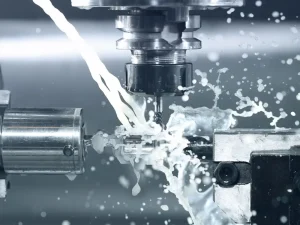
Milling is a popular type of metal machining that uses a dedicated milling machine. In this process, the workpiece is secured on the machine. The cutting tools rotate and move around the workpiece to remove material. During the operation, the workpiece stays stationary while the moving cutters shape and cut it. Both manual and automated milling machines are available, differing mainly in performance. Modern manufacturers favor CNC milling machines. This is because they deliver greater precision and tighter tolerances.
2- Turning
Turning is essentially the opposite of milling. It uses lathes, and the working differs from that of milling machines. In this type, the workpiece rotates while the cutting tools remain stationary. The cutting tools remain stationary during their work. This is the significant difference between milling and turning. The workpiece rotates, and chips are removed to produce products of specific shapes. Turning is typically used to make cylindrical or conical parts or products. Turning and milling are not alternatives; each produces different parts.
3- Drilling
Drilling is one of the most common types of metal machining. This machining process helps create holes in metal pieces. It involves using a dedicated drill press that rotates into the solid metal. Remember, the holes created by drilling are handy in fitting bolts, screws, etc. into the metal pieces. Both manual and CNC-based drilling machines (drill press) are available. They differ in precision and tolerance. For tight tolerances, it’s best to use CNC drilling machines.
4- Grinding
Various metals are used in manufacturing. Some of these have smooth surfaces with no bumps or roughness. However, most of these metals require a grinding process to remove their roughness and make the surface smooth. In such a case, the grinding process is used because it involves an abrasive wheel. This wheel rotates on the metal’s surface, removing its roughness. Grinding is done using a dedicated grinding machine that works on all types of metals.
5- EDM & Broaching
EDM (Electrical Discharge Machining) is not a conventional machining type. It is more advanced than cutting the metal piece using an electrical spark (discharge). This spark vaporizes the metal piece, creating cuts. On the other hand, broaching is also an essential metal-machining process. It uses a broach tool consisting of multiple teeth. These teeth can cut and shape the metal. Broaching is generally preferred when manufacturers need slots, splines, or grooves.
How Does the Metal Machining Process Work?
In simple terms, metal machining involves cutting and removing material from the workpiece. This is the easiest definition; however, this process can be completed in a few steps. The operations must follow each step in the machining process. Here are the details of those steps involved in metal machining:
1- Choose the Right Material
As I said earlier, there is a wide range of metals available. Manufacturers use a material that their project needs. For example, stainless steel is preferred when manufacturers make corrosion-resistant parts or products. If they want to make parts lighter, aluminum is the best option. Each metal has unique properties that affect its selection. For exceptional strength, titanium is considered the best option.
2- Selection of Machining Process
As discussed above, there are different types of metal machining. Each of them produces metal parts of specific shape and properties. For example, the turning process is used to make round products. On the other hand, drilling and grinding are used to create holes and smooth surfaces, respectively. You should first decide on the machining process before starting. This will help reduce confusion and let you make high-quality parts.
3- Mount Workpiece on the Machine
Once the material and machining process are decided, the next step is to mount the workpiece on the machine. Each machine has a designated location for mounting material. Remember, you must fix the workpiece so it does not move or loosen when the machines run. In the turning process, this workpiece will move, so it must be clamped. This will ensure the material moves correctly and doesn’t shift out of position.
4- Set Machining Parameters & Start the Operation
Modern machines let you adjust different parameters. These include cutting speed, feed rate, depth of cut, and more. You’ll have to set these parameters correctly so that the machines work properly. Enter the correct values for your specific cutting operation. These machines use a computerized system that sends signals to cutting tools based on the data entered.
If you give it the wrong parameters, the cutting tool will follow the incorrect instructions. This will eventually affect the precision of the machining process. Once done, you can start the metal machining process. The machine will work, and the cutting tools will begin removing material from the workpiece. If you are using a drill press, it will start creating holes precisely.
Remember, using the correct machining parameters is essential to achieving tight tolerances. After machining is complete, I recommend checking the part’s dimensions. This will ensure that the part you made meets the desired requirements. Each step involved in the metal machining is equally essential for high-quality production.
Common Metals Used in Machining
When it comes to metal machining, there are no material limitations. You can choose any metal regardless of its thickness or hardness. Harder materials are generally more difficult to cut. However, modern machines are powerful enough to handle these hard metals. In fact, these machines can even shape titanium, which is the strongest material and is hard to cut.
Here is the list of some of the most common metals used in machining:
- Brass
- Bronze
- Copper
- Titanium
- Aluminum
- Magnesium
- Nickel Alloys
- Carbon Steel
- Stainless Steel
This list shows the most common metals used in machining. The manufacturers choose the material (metal) as per their needs. For example, they use copper when making parts that require electrical conductivity. Similarly, titanium and aluminum are preferred for their strength and lightweight properties, respectively. Brass is preferred for ease of machinability if needed.
Advantages of Metal Machining
Metal machining is a diverse process that offers excellent versatility. It can produce products of even complex shapes with ease. Additionally, this machining process involves specific techniques. This makes metal machining a top choice for various industries. Here is a list of some advantages of metal machining:
- Surface Finish: Metal machining can create parts with excellent surface finishing. Manufacturers generally use a grinding process to remove surface bumps and roughness. When polished, these surfaces look aesthetically appealing.
- High Precision: One of the significant advantages of metal machining is its excellent precision. The modern machines use CNC technology and are very precise. You get the result as per the parameters you set in the machines.
- Complex Shapes: Creating complex-shaped products is generally difficult. However, metal machining uses advanced CNC-based machines. These machines can easily produce even complex shapes thanks to computerized instructions.
- Minimal Material Waste: Cutting processes involving melting or material result in significant waste. However, metal machining relies on precise cutting and chip removal. This results in minimal material waste, a significant advantage.
- Fast & Reliable Production: Metal machining is known for its excellent speed. The use of advanced machines makes cutting tools move faster. So they cut quickly and precisely, ensuring fast production. Metal machining tasks that used to take hours can now be completed in minutes.
Applications of Metal Machining
Metal machining is used in almost every industry that works with metal. However, its use in the automobile and aerospace sectors is more prevalent. The reason is that parts used in these sectors require precision and tight tolerances. Metal machining helps achieve those tight tolerances. Here is the table showing the most popular applications of metal machining in different sectors:
| Industry | Application of Metal Machining |
| Automotive | Engine parts, gear shafts, brakes, |
| Aerospace | Turbine blades, landing gears, structural components |
| Medical Devices | Surgical instruments, implants, prosthetics |
| Industrial Machinery | Gears, pulleys, shafts |
| Electronics & Electrical | Connectors, heat sinks, casings |
| Defense & Military | Firearms, weapon components, tank parts |
Conclusion
In conclusion, metal machining is an important process across various manufacturing industries. It involves cutting and removing the chips from the material to make custom-shaped products. What I like about metal machining is its ability to create parts with precision and tight tolerances. Moreover, this process is cost-effective as it does not require extensive labor and also reduces material waste. In this article, I discuss everything about this machining type that every beginner should know.