
 Deutsch
 Français
 日本語
 Español
 Italiano
 Русский
 繁體中文
 한국어

CNC machining has become an integral part of modern manufacturing, right? A wide range of advanced CNC-based machines makes the manufacturing efficient and quick. However, this has also improved the importance of CNC machinists and their skills. In fact, CNC machinist skills for modern manufacturing play a key role in precision.
Even advanced machines cannot get the desired precision if a machinist lacks the skills and experience. Mediocre CNC machines can achieve tight tolerances if the machinist has the right skill set. If you’re into the CNC machining sector, getting the skills matters most. In this article, I will discuss the key skills CNC machinists must have to achieve the best results.
What is a CNC Machinist?

Before I discuss core skills, let’s first understand what CNC machinists are!
CNC machinists are professionals who operate CNC machines. These can include CNC milling machines, lathes, and grinders, to name a few. They are responsible for converting CAD designs into physical product parts. Additionally, their expertise ensures the part they manufacture is precise. Simply put, CNC machinists are operators of CNC machines.
As you know, CNC machining is a multi-step process. First, the CAD designers make the CAD design. This design is precisely similar to the part you want. This CAD design is converted into G-code through CAM software. After that, the CNC machinist’s work begins as he loads the G-code into the machines.
Interestingly, the role of CNC machines is way more complex and broader than one may think. He sets up and adjusts various parameters and makes the CNC machine produce the desired-shaped parts. In CNC machining, the margin of error is small. Slight mistakes can result in parts with inaccurate shapes. That’s why the CNC machinist’s responsibility becomes even more important.
Different manufacturing processes require different machining tools, speed, and feed rate. The CNC machines handle these aspects. They determine the right speed and feed rate and control the CNC machines to achieve the best results. Not only that, but these machinists are also experts at troubleshooting minor technical issues with the machines. Without CNC machinists, CNC machining cannot achieve precision.
Core CNC Machinist Skills for Modern Manufacturing
CNC machines are not easy to operate. The reason is that machinists have to handle many tasks. If they don’t have the right skill set, they may not be efficient in their work. In the section below, I will discuss the core skills that every CNC machinist needs.
1- Blueprint Reading
As I mentioned above, CNC machining begins with creating a CAD design or drawing. These designs consist of different parameters. These include measurements, dimensions, tolerances, symbols, and so on. Blueprint reading is actually understanding these small parameters. These parameters provide different information, and understanding them helps achieve precision.
If a machinist does not have a firm grasp of blueprint reading, he may make mistakes when interpreting those parameters. This will affect the precision of the final parts. As you know, modern manufacturing demands tight tolerance and precision. If a machinist does not understand blueprinting, mistakes and imperfections are inevitable. Therefore, every CNC machinist has command of blueprint reading.
2- CNC Machine Operation & Machine Setup
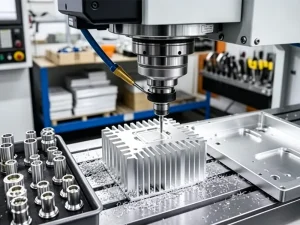
Setting up and operating the CNC machines is another critical skill. As a machinist, you must have command of CNC machines. This helps quickly install the right tools, load the workpiece, and adjust other parameters. If you’re too slow, this will affect your productivity. Good machinists are always quick to operate and set up machines.
As discussed above, there are different CNC machining tools. Each of these tools performs a different role. You should understand these tools and know which tool is best for what. During operation, the CNC machines can produce vibration and other such abnormalities. You should be ready to tackle these small issues. In other words, learning to operate CNC machines is a mandatory skill.
3- CNC programming (G-code editing, M-Code)
As I said earlier, CAD design is converted into G-code and M-code instructions. These codes are fed to CNC machines to cut and shape the workpiece with precision. Every CNC machinist can handle and edit these G-codes and M-codes. This helps achieve precision during the fabrication of various parts and products.
G-codes and M-codes are about the movement and functionality of CNC machines, respectively. You should edit G-code when you need to change the cutting path, adjust speed, and so on. Similarly, M-code adjustment is performed when a tool change or another machine function is required. Once you have mastered these programs, you will be able to modify the codes and achieve better precision.
4- Tool (Cutters) Selection & Tool Changing
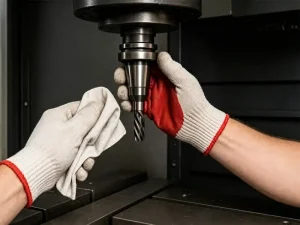
Various CNC tools are used to manufacture high-quality, precise parts and products. Which tool you should use depends on your preference, part design, material type, and so on. Some popular tools include end mills, drills, reamers, and more. You should understand each tool and know which one to use for what.
Additionally, changing different tools can be challenging if you don’t have the right skill set. Remember, modern manufacturing requires quick tools changes without wasting much time. Therefore, you must know how to change the tools of CNC machines. Quick tool selection and changing make the CNC machines very efficient and fast. The right tools also help achieve better finish quality.
5- Cutting Speeds & Feed Rate Understanding
As a CNC machinist, you must understand speed and feed rate. These two parameters are crucial for making precise parts in less time. However, different parts require different manufacturing speeds. The wrong speed or rate can result in low-quality parts with an improper finish. Speed in CNC machines refers to how fast cutting tools or spindles rotate. In contrast, feed rate indicates the rate at which cutters engage the material during machining. Both of these parameters must be interpreted carefully by the CNC machinist.
6- Materials & Their Properties
CNC machining is a versatile process: it can cut shapes and make parts from different materials. These include aluminum, brass, copper, stainless steel, titanium, and more. However, each of these materials has unique properties. Understanding these properties is a crucial soft skill for smooth CNC machining.
For example, some materials are generally hard, which can wear out machine cutting tools. Similarly, some materials are soft and require controlled speed for their fabrication. As a CNC machinist, you carefully understand the material before getting started. These materials affect the parameters you set on the CNC machines for manufacturing different parts.
7- Precision Measurement (Different Tools)
As you know, modern manufacturing is all about precision. A small mistake in any part may make it unfit for specific use. That’s where the precision measurement becomes invaluable. This skill involves using the measurement tools to ensure the part meets the required dimensions. These tools can include calipers, dial indicators, micrometers, and more.
You must learn how to use different precision measurement tools. They can help you identify the right measurement and prevent errors. These skills are also useful in detecting and identifying errors by measuring the parts. If you notice an issue, you can then use the CNC machines to remove it. A strong grip on precision measurement is the need of the hour for every CNC machinist.
8- Surface Finish Control & Basic Troubleshooting
The importance of surface finish cannot be overstated in modern manufacturing. CNC machines can easily achieve the right surface finishing if the machinist has the right skills. Interestingly, various parameters affect surface finishing. These include speed, feed rate, vibrations, and so on. If a machinist has the skill to control these factors, he will get parts with excellent surface finishing.
Apart from this, CNC machinists also understand basic troubleshooting. During CNC machining, the machine can face any issues. You might get any dimension issues, tool vibration, overheating, or abnormal parts. Such parts are generally either oversized or undersized depending on the issue in the machines. The CNC machinist has the skills to tackle these small issues and fix them.
9- Attention to Detail & Problem-solving
This might sound less important, but attention to detail is the heart of CNC machining. If CNC machinists overlook things, they are more likely to make mistakes. As discussed above, the margin of error in CNC machining is very low. Therefore, every CNC machinist has soft skills of attention to detail. You should check every aspect, like tools selection, tool placement, programs, and so on.
This ensures you won’t make mistakes during CNC machine operations. Additionally, if you encounter any issues, you should resolve them in your mind. Problem-solving skills are crucial for efficient CNC machining. You may encounter issues such as incorrect dimensions, tool wear, programming errors, and more. You should be prepared and have a backup plan in case you encounter an unexpected error during CNC machining.
10- Skill of Growth (Learning & Improvement)
Undoubtedly, CNC machining is an advanced process that uses CNC-based machines. However, things are changing quickly due to the introduction of new technologies. You’ll see many newer machines that are very efficient and automatic. The CNC machinist must be skilled enough to learn new things and technology. If you stop learning, this will restrict your growth.
As a result, you will be replaced by a more skillful person sooner or later. Therefore, you should always learn new technologies and gain command of CNC machines. Hard skills are important for running CNC machines. However, soft skills are equally important for becoming a professional in CNC machining. A combination of hard and soft skills is what makes you the best in the business.
Do CNC Machinists Have a Good Future?
Yes – CNC machinists have a bright future ahead due to increasing demand for precision.
As you know, manual machining is cheap, but it does not achieve precision. However, modern manufacturing requires precision and tight tolerances. Additionally, manufacturers want to make parts quickly without compromising on precision. This can only be done through CNC machining.
That’s the main reason CNC machinists have good opportunities going forward. You’ll see many manufacturers have shifted from old manual machines to modern CNC machines. Running manual and CNC-based machines is different. Those companies require expert CNC machinists to run these machines.
That’s another factor indicating the demand for CNC machinists. There are various industries in which CNC machining has become mandatory. These include automobiles, aerospace, defense, and so on. In aerospace and automobiles, small mistakes in parts can result in deadly accidents. The same goes for the medical and defense industries, which demand tight tolerances.
High demand for CNC machining simply requires more CNC machinists. This means there is a strong career for CNC machinists. However, you must be an expert at operating and controlling CNC machines. In the industry, demand for CNC machines is high, but only among experts. Mediocre CNC machinists generally struggle to secure permanent jobs or careers.
Frequently Asked Questions
Is a CNC machinist a good career?
Yes. CNC machinists are in demand. The reason is that different industries are shifting from manual to CNC machines. So they hire CNC machinists to run these machines efficiently. This helps them make precise parts with tight tolerances at a fast pace.
What does a CNC machinist do?
CNC machinists run and control the CNC machines. They set up machines, adjust the parameters, and run them smoothly to produce precise parts. In other words, their role is to make parts through CNC machining.
What industries hire CNC machinists?
CNC machinists are in demand, and various industries regularly hire them. These include aerospace, automobile, defense, machines, and the list goes on. It is no exaggeration to say that there are endless opportunities for CNC machinists across different sectors.
How much can a CNC machinist earn?
CNC machinists can easily make around $50,000 per year. The salary of CNC machinists varies depending on different factors. These include industries in which machinists work and the location. Machinists with more experience generally earn more.
Conclusion
In conclusion, CNC machinists must be skilled enough to operate and command machines effectively. Remember, artificial intelligence is taking over things. If you’re not highly skilled, you’ll be replaced quickly, regardless of your profession. Therefore, it is crucial to learn the right skills to take your CNC machining to the next level.
In this article, I have discussed 10 key skills every CNC machinist must learn. One thing that many overlook is the importance of learning new things in CNC machining. Learning new skills might feel unnecessary, but it can be very helpful when you are stuck while machining. They help you find new ways to solve problems.