
 Deutsch
 Français
 日本語
 Español
 Italiano
 Русский
 繁體中文
 한국어

Machining tolerance is very important in modern manufacturing. You’ll see many manufacturers offering 100% precision and accuracy in their services. However, no machines, even those with CNC, can offer perfect accuracy. Interestingly, many don’t know what this term means. This is why a complete guide to standard machining tolerances becomes essential.
Machining tolerance allows manufacturers and engineers to account for a margin of error. Tolerance is the acceptable deviation of a product from the ideal size or blueprint. Using machining tolerances helps prevent mistakes. Using tolerance ensures that the parts made will fit their intended parts during assembly. In this article, I will discuss everything about machining tolerance.
What Are Machining Tolerances?

Machining tolerance is the acceptable variation in the size of different parts. In other words, it is a deviation of parts from the ideal size or blueprint. However, this deviation is acceptable and does not affect the working or functionality of parts. Manufacturers use this variation to ensure that the parts they make fit their counterparts.
Let’s understand machining tolerance with a simple example. Imagine you need a part with a thickness of 10mm. For machining, achieving a precise 10 mm thickness can be challenging. Even CNC machines cannot achieve 100% precision in machining. That’s where the machining tolerance comes into play. You keep a margin of error of ± 0.5 mm.
This means your part will work if it is either 9.95 or 10.05 mm thick. This small variation is actually due to machining tolerances. So machines become more comfortable and achieve precision within ± 0.5 mm. You still get the parts working fine despite small deviations. Too-tight or too-loose machining tolerances are not good.
For example, you need a 10 mm thickness, but you keep the tolerance at ±1 mm. This means you allow machines to produce 9mm or 11mm as acceptable. Parts that are 9mm would be too loose when fitted in other parts. On the other hand, 11 mm parts may not go inside the other part. With balanced tolerance, parts remain functional and fit together perfectly.
Remember, higher machining tolerances mean the parts being made require greater precision. In contrast, a part with tight tolerances has a small margin of error. Parts with tight tolerances are generally produced on high-end CNC machines. Setting tolerance helps manufacturers decide on the costs and machines to use to make that part.
Terms Used in Machining Tolerance
In machining tolerance, a few terms and parameters are used. These parameters provide insight into the tolerances. The list of these terms used in machining tolerance is as follows:
-
Nominal Size
Nominal size refers to the ideal or perfect size. Achieving this nominal size is difficult as it requires exceptional precision from the machine. For example, you want to make a part with a thickness of 10 mm. In this, 10 mm will be the nominal size that the target machine aims to achieve.
-
Actual Size
As I said above, machining is less likely to achieve the desired size. After machining, the part thickness might be 9.96 mm. This part is still workable as it is very close to the 10 mm thickness needed for the part. The 9.96 achieved after machining is called the actual size.
-
Tolerance
Tolerance is already discussed in the above section. It refers to the acceptable deviation from the ideal size. The examples include 10mm ± 0.5 mm. This ±0.5 mm is called the tolerance. Two signs indicate this specific amount can be lower or higher than the desired size.
-
Upper Limit & Lower Limit
Tolerance is indicated by two limits: the upper and lower limits. In 10mm ± 0.5 mm, 10.5 is the upper limit, whereas 9.95 is the lower limit. The size of the part after machining must be within these upper or lower limits. If the machined part exceeds the limit, it is unfit for use.
-
Deviation
Deviation refers to the actual variation of a machined part from its nominal size. Let’s take an example of machining tolerance of 10mm ± 0.5 mm. The part measured 9.95 instead of 10mm. In this case, the deviation will be -0.05. Similarly, if the machine part has a thickness of 10.3, then the deviation would be +0.3.
Types of Machining Tolerances
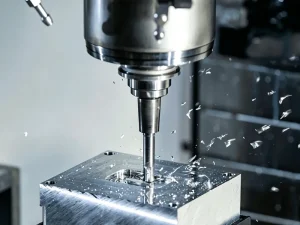
There are different types of machining tolerances. Each of these tolerances caters to different sides of the parts being manufactured. Some types focus on their size, while others ensure their surface finish is of the highest quality. In the section below, I will discuss various types of machining tolerances.
1- Dimensional Tolerances
Dimensional tolerance focuses on physical aspects of the part being machined. These aspects can include length, width, thickness, and so on. For example, you’re making a rod of length 70mm with ± 0.5 mm tolerance. This tolerance will be called dimensional because it focuses on the length of the parts. Parts would be made with a length of 69.95 or 70.05 mm. This part will function even though it’s not 70mm.
2- Geometric Tolerances
Unlike dimensional tolerance, geometric tolerance focuses on the part’s shape. For example, it checks the orientation of the part that is being machined. This ensures the part is perfectly aligned with other parts. Imagine you make a part with a precise length, but its surface has a dent or a slope. Due to this slope, the part won’t fit on the corresponding part. Geometric tolerance ensures parts are of perfect geometry. As a result, assembly and alignment after the machining become effortless. If there is no geometric tolerance, manufacturers might end up making parts with less precise shapes or orientations.
3- Unilateral vs Bilateral Tolerance
Unilateral and bilateral tolerances are two important types. Unilateral tolerances indicate acceptable deviation from the ideal size in one direction. It can be either positive (larger than the ideal size) or negative (smaller than the ideal size). For example, you are making a rod 70 mm long with a tolerance of +0.2/-0.0. This means the size can be up to 70.02 mm, but cannot be less than 70mm.
On the other hand, bilateral tolerance allows deviation in both directions. For example, 70mm with ± 0.5 mm tolerance is an example of bilateral tolerance. This means the part can be higher (up to 70.05 mm) or lower (up to 69.95 mm) than the ideal size. Parts with bilateral tolerance are easier to make. Why? The machines get more margin for errors, and a slight mistake in either direction is acceptable.
4- Limit Tolerance
Generally, machining tolerance is indicated as a ± sign, right? For example, 70 mm ± 0.5 mm. However, in limit tolerance, you won’t get any sign. Instead, these limit tolerances are mentioned by the upper and lower limits. This type of tolerance differs from others in its expression. In limit tolerance, it is written as 70.05-69.95 (exact limits). You won’t see ±0.5mm in limit tolerance. This type of tolerance expression is easier to understand and offers better clarity.
5- Surface Finish Tolerances
Surface finish tolerance ensures that parts machined have a smooth surface. In this type, there is an ideal surface smoothness to be achieved. However, manufacturers maintain tolerance to prevent mistakes. During machining, cutters cut the part, but the surface becomes rougher at the cut. This irregularity in the cut must be corrected so that the parts function properly. These irregularities are measured in Ra (Roughness Average). Manufacturers ensure that the Ra of the parts they produce meets the required specification. For example, Ra 1.2 µm ±0.1µm. This means manufacturers can deviate by only 0.1µm and still achieve the correct surface finish on the part.
Why is Machining Tolerance Important?
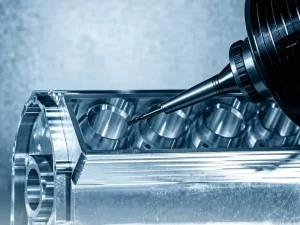
Machining tolerance is crucial for almost all manufacturing processes. Its importance cannot be overstated – every modern manufacturer uses this tolerance. In the section below, I will discuss why this machining tolerance is so useful:
-
Reduce Errors
First, machining tolerances prevent unexpected errors. As I said earlier, machines cannot achieve 100% precision. When these machines operate within a set tolerance, they deliver results with precision within the desired range. This reduces the risk of errors and ensures that parts perform their intended function.
-
Saves Time on Bulk Machining
Making parts that require 100% precision is difficult. The machines take more time due to the high precision requirements. Conversely, parts with some tolerances are quick to make. Machines utilize margins of error to produce parts within an acceptable range. This results in faster turnaround, which is very helpful in bulk machining.
-
Less Material Wastage
Without a machining tolerance, there will be significant material waste. The machines will work hard to get 100% precision. For this, they will cut more parts to achieve the right size or dimension. With tolerance, machines can cut small parts and get the size within an acceptable range. This reduces material wastage, especially during CNC machining.
-
Improve Performance
The performance of the parts improves when they are made with tolerance in mind. Why? The reason is that tolerance ensures that parts have the correct size, dimensions, and geometry. So they fit perfectly into the corresponding parts, resulting in a more secure connection or assembly. This eventually improves the performance of those specific parts.
-
Cost Effectiveness in Machining
If a part has a tolerance, its manufacturing becomes easier. For example, making parts with no margin for error requires advanced machines. Such machines are costly, and they also waste more materials. However, parts with some tolerance are easier to make. Regular machines can make them, as they allow some deviation or mistake tolerance. These machines’ operation results in less material waste, which is another key.
Factors That Affect Machining Tolerances
You might be wondering about how to set machining tolerance. Interestingly, a variety of factors affect machining tolerance. Below is the list and details of all the key factors that influence machining tolerance.
-
Type of Material
The type of material you’re machining affects the tolerance. As you know, every material has unique properties. When it undergoes machining, it can behave differently. For example, hard materials remain stable under machining and don’t expand. So achieving tight tolerance in these hard materials is easier. On the other hand, soft materials, i.e., plastics, expand under stress and generally deform. When machining soft materials, achieving tight tolerances is more difficult. You will see parts made of steel with tighter tolerances than plastic or even aluminum.
-
Machine Capability
Machines and their capabilities strongly influence machining tolerances. If the machine is manual, it would make mistakes, affecting tight tolerances. On the other hand, modern machines perform better at achieving tight tolerances. In fact, some modern CNC machines are even better, as they are very precise. Examples of such machines include CNC milling machines, CNC lathes, and CNC machining centers.
-
Tool Wear & Sharpness
Machines use different cutting tools to create precise cuts. If these cutters are in good condition, they will make precise cuts. In other words, they will remove materials with precision. However, tools with wear or dullness won’t cut with precision. As a result, they may remove more or fewer materials per cut. This imperfection in the cutting can affect the machining tolerance. You should choose sharp cutting tools when you need tight tolerances.
-
Vibration during the Machining Process
Vibration is common for large machines, right? If the workpiece vibrates during machining, precision will be compromised. The reason is that the cutting tool may make incorrect cuts due to the workpiece’s vibration. As a result, you won’t be able to achieve tight tolerance. When machining, you should always clamp the work firmly. This will ensure the workpiece does not vibrate, resulting in better precision and tighter tolerances.
-
Part Geometry and Complexity
It is obvious that simple parts are easier for manufacturers to produce. The machines can make them in minutes, if not seconds. On the other hand, making parts with complex geometries cannot be challenging. Even the high-end machines can make mistakes when making such parts. So the chances of errors are high in making complex-shaped parts. It is recommended to choose CNC machines for complex-shaped parts or products.
-
Machining Process Used
There is a wide range of machining processes available for manufacturing. Each of them differs in terms of speed and precision. For example, manual machining is slower and less precise. Examples include forging, casting, injection molding, and so on. On the other hand, CNC machining is fast and precise. If you want to achieve tight tolerances, you should prefer CNC machining. For parts with loose tolerance, manual machining works fine.
Conclusion
Standard machining tolerances are very helpful for manufacturers, engineers, and designers. This allows them to have a small margin of error. This margin of error or acceptable variation helps make parts affordable. How? This is because machines remove fewer materials when they have tolerance.
They remove less material to ensure they make parts within a specific range, rather than hitting the sweet spot. This results in less material removal or wastage, making parts cost-effective. Machining tolerance indicates the part will still work if you don’t target the sweet spot. Various factors affect the standard machining tolerance. In this article, I have discussed everything about machining tolerances.