
 Deutsch
 Français
 日本語
 Español
 Italiano
 Русский
 繁體中文
 한국어

Rapid prototyping has been in use for decades. However, the ways it was used in the past and the way it is used now are different. Earlier, manufacturers had to use conventional methods to create physical product models. This prototyping was very difficult due to the use of slow, time-consuming processes. However, things have changed with the introduction of a rapid prototyping process.
The reason is that rapid prototyping involves the use of computerized data or instructions. This allows models to be made in literally hours instead of days or months. There are different types of prototyping processes, and each works differently. In this article, I will explore the basics of rapid prototyping and its common methods. So, let’s get started.
What is Rapid Prototyping?

First things first – Rapid means quick, referring to the speed of this process. It is used in almost all modern industries to check the initial model of a product before launch.
Rapid prototyping is a process used in product development. It helps make a prototype (model) of a product very quickly using computerized instructions. Modern machines such as 3D printers and injection molding machines are used in this process. Instead of physical methods, rapid prototyping relies on digital manufacturing. It helps make a prototype in hours, if not minutes.
As you know, modern manufacturers face intense competition. So they put all their efforts into making their products better and more reliable. In this case, prototyping is useful for developing an initial product model for testing. Using conventional printing methods can be very expensive. Why?
That’s because they involve tools that are costly and work slowly. That’s where rapid prototyping becomes valuable. This process involves creating a CAD model of a product that requires a prototype. Remember, expert CAD designers make these models with precision. This step is crucial as small mistakes in CAD designing can affect the precision of the final product (prototype).
Once the CAD design is ready, the next step is to convert the digital file into a set of coded instructions. This is because our machines only understand code, not digital files. For this, advanced software is used that converts CAD designs into code in STL format. This coded instruction is then fed to the machine you’re using. The machines you use depend on your manufacturing operation.
The machines, after analyzing the instructions, produce the final product (a prototype). Note that the way machines produce prototypes varies by manufacturing process. In additive manufacturing, machines build products layer by layer. In subtractive manufacturing, machines cut and remove material from the workpiece. As a result, they produce a prototype (product). This whole prototyping process can be completed in a few hours, helping you make a prototype quickly.
What are the Advantages of Rapid Prototyping?
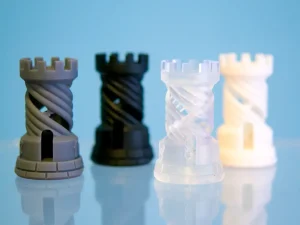
Rapid prototyping has become widespread across various industries. This is because it allows for quick model creation and is very flexible. Here are some key benefits of rapid prototyping:
- Waste Reduction & Optimization
Machines used in rapid prototyping are highly precise. They make products (prototypes) without using a large amount of material. In simple terms, they use only the materials needed to make a product. This reduces waste, making the process more efficient.
- Fast Speed in Product Development
Rapid prototyping is known for its speed. If you have a CAD model, you can make a physical prototype from that design in just minutes or hours. Modern machines, such as 3D printers and CNC machines, operate through computerized instructions. So, they convert designs into physical models with precision in no time.
- Flexibility & Design Changing
Conventional methods are less flexible. However, rapid prototyping allows you to modify your CAD models and produce prototypes with each change. This allows you to experiment with different designs. On the other hand, if one CAD model isn’t the best, you can make a new one and quickly prototype it.
- Visualization & Complex Geometries
One of the standout features of rapid prototyping is its precision. As I said earlier, this process relies on computerized instructions (code). So you can easily prototype complex-shaped products. The dimensions of that prototype model will match those of the CAD model you use.
- Reduced Cost & No Tools Needed
Conventional prototyping methods require dedicated tools. These include dies, molds, and more. However, rapid prototyping requires no additional tools except for dedicated machines. Only one machine (printer or injection molding machine) is all you need to make products. This is a big plus in saving money, especially when the budget is tight.
Most Popular Rapid Prototyping Processes
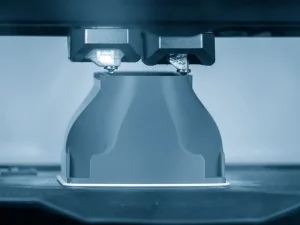
Rapid prototyping may seem like a single process. However, it is not because several processes are used to create product prototypes. In the section below, I will discuss the most popular rapid prototyping methods.
1- 3D Printing
As previously mentioned, there are primarily two manufacturing processes. These include:
- Additive manufacturing
- Subtractive manufacturing
3D printing is additive manufacturing using a dedicated printer. This printer makes the prototype (object) layer by layer. Popular materials used in this rapid prototyping include plastics, rubber, and more. It is worth noting that there are different types of 3D printing, which are as follows:
- SLA (Stereolithography)
- SLS (Selective Laser Sintering)
- FDM (Fused Deposition Modeling)
- DMLS (Direct Metal Laser Sintering)
Each of these 3D printing methods works differently. However, the primary mechanism of each 3D printing remains the same in all these types. First, the CAD model is created and converted into a code file. This file is fed to 3D printers, which then act accordingly. The material (plastic filament) undergoes melting and curing under UV lights.
The printer then produces the final prototype layer by layer. I consider 3D printing the best method for rapid prototyping. Why? That’s because it lets you adjust designs quickly. Additionally, this method is more cost-effective than other rapid prototyping processes. Not only prototyping, but this method is also suitable for full-fledged manufacturing processes.
2- Injection Molding
Injection molding is another prototyping method. In this method, material is melted and injected into the mold. The molten material then cools, solidifies, and assumes the shape of the mold, forming the final product. It involves dedicated injection molding machines and molds.
Although this method is used to make prototypes, I don’t recommend it. Why? That’s because it involves dedicated molds. For every prototype, you’ll need to make a mold. The mold will be identical in shape to the prototype. Creating a mold is a complex and very expensive process. So, dedicating each prototype is never a wise idea.
In the past, manual injection molding machines were used, which were slow. However, things have changed as computerized systems control advanced machines. You should use injection molding when you need to produce a large-scale prototype. The higher tooling costs (molds) make this method unsuitable for smaller-scale prototyping.
3- CNC Machining
CNC machining is one of the most popular rapid prototyping methods. It is a subtractive manufacturing process involving removing material from the workpiece. There are different types of CNC machines used for prototyping. These include:
- CNC Milling
- CNC Turning
- CNC Routing
- Multi-Axis CNC Machining
- CNC EDM (Electrical Discharge Machining)
Each of the above-mentioned methods uses dedicated machines. For example, dedicated CNC milling machines use a CNC lathe for turning. Interestingly, CNC machines use dedicated computerized instructions. First, you’ll have to make a CAD model, convert it into code, and feed it to CNC machines.
The workpiece to be cut and shaped is loaded on the machines. Once switched on, the cutting tools, following instructions (coded), cut the workpiece. During this, the cutters remove material from the workpiece to produce a prototype identical to the CAD model. This way, you get a prototype from raw material using CNC machines by giving it computerized data.
Should you consider CNC machining for rapid prototyping? Yes. The reason is that this method can make prototypes with precision without wasting materials. Additionally, you can also make either large or small-scale prototyping using CNC machines. However, differently shaped prototypes may require different machines. For example, you need lathes to make cylindrical products.
4- Vacuum Casting
Vacuum casting is another method used for small-scale prototyping. Its primary working mechanism is similar to that of injection molding. However, injection molding is suitable for large-scale production. On the other hand, vacuum casting is ideal for a few prototypes. This prototyping method uses a silicone mold rather than a metal mold used in injection molding.
The molten material (plastic) is poured into this mold to make an object (prototype). It is noteworthy that this pouring of molten material into a mold is done in a vacuum. Why? That’s because it helps pour without filling air bubbles inside the molds. As a result, you get products with excellent quality. This method is generally preferred when making multi-part assembly products.
How to Choose Between Rapid Prototyping Techniques?
As discussed above, there are different prototyping techniques. Each process differs from the others in its working. Additionally, some processes are ideal for a large number of prototypes, and others are ideal for a small number. Here are some tips to help you choose the right rapid prototyping methods:
1- Quantity Requirements
First, analyze how many prototypes you need. Remember, these prototypes are used to convince investors of your projects. For 1 to 3 prototypes, use 3D printing. On the other hand, vacuum casting is generally considered best for prototypes between 15 and 50. Lastly, injection molding is best when you need a large number of prototypes, i.e., more than 100.
2- Strength & Functionality
In some cases, you’ll need prototypes that are stronger and fully functional. In such cases, you should consider using CNC machining. This method uses metal materials to produce very strong prototypes. Additionally, 3D printing, especially SLS, can make fully functional products from plastic materials. Injection molding and vacuum casting are not ideal for making strong prototypes.
3- Material Requirements
Rapid prototyping is not limited to specific materials. Instead, you can use plastics, metals, and rubber depending on your needs. If you want to make a plastic prototype, you should 3D print. On the other hand, CNC machining is the best rapid prototyping method for making metallic prototypes. You can use any metal with these prototyping methods. Additionally, vacuum casting and injection molding are compatible with both rubber and plastic.
4- Design Complexity
Each rapid prototyping method differs from the others in terms of design complexity. I recommend using CNC machining for prototyping complex geometries. On the other hand, 3D printing is well-suited for products with internal channels or lattice structures. Lastly, injection molding and vacuum casting are similar in terms of design complexity. You can make a complex design using these methods if you have the right mold shape. The mold you use must match the model you want to create. Since all methods use computerized systems, they offer optimal precision for complex geometries.
5- Budget & Time
It is crucial to choose a rapid prototyping method that fits your budget. 3D printing is the cheapest way to quickly produce prototypes. Similarly, CNC machining is moderately priced but exceptionally fast. The precision of CNC machining is also top-notch, making it best suited for complex projects. Injection molding is the most expensive prototyping method because it requires injection molds. Creating these molds requires both time and money, making them unfit for budget-friendly projects.
Conclusion
In conclusion, rapid prototyping is an excellent way to make sample products. This model is a small test product that helps you check the quality and functionality of your idea or concept. Additionally, you can also use this model for your investors. This way, you can convince them to invest in your projects.
Various techniques and processes are used in rapid prototyping. Each of these methods is unique and compatible with different materials. You will have to choose a process that is compatible with your material, quantity requirements, and budget. In this article, I have discussed everything about rapid prototyping and its methods.