
 Deutsch
 Français
 日本語
 Español
 Italiano
 Русский
 繁體中文
 한국어

Aluminum is an essential material for many different things. Different aluminum alloys offer excellent properties. Among those, Aluminum 6061 is a popular alloy that contains silicon, magnesium, and other elements. However, there is a common debate over aluminum 6061 T6 vs T651 vs T6511.
Different types of 6061 aluminum alloys differ in their heat treatments. Each type of alloy offers specific properties. The presence of the alphabet “T” with the number of these types often confuses everyone. In this article, I will cover everything you need to know about aluminum 6061-T6, T651, and T6511.
What Does “T” Mean in Aluminum 6061 Alloys?

Let’s first debunk the myth of “T” before we discuss these types of aluminum 6061.
“T” written before the number indicates the heat treatment a specific aluminum has gone through. Its tempered designation helps us understand the tempering process. It is noteworthy that aluminum is not very strong, but it is then heat-treated. This heat treatment imparts strength to the aluminum or its alloys.
Those heat treatments are categorized with “T”. For example, T6 indicates the aluminum (alloy) has gone through a natural heat and cooling process. On the other hand, T651 aluminum has the properties of T6 aluminum but also undergoes stretching. This additional stretching step is typically used to relieve internal stress in aluminum.
T6511 aluminum has the properties of T651 and undergoes one additional step. This extra step involves straightening aluminum and removing stress. This temper designation (T) is beneficial for indicating the heat treatment a material undergoes. So, T6, T651, and T6511 are all types of aluminum 6061, but differ in their heat treatment.
What are Aluminum 6061, T6, T651, and T6511?
As I said earlier, pure aluminum has some weaknesses and compromises in many aspects. Right? That’s where the aluminum alloys get the attention. Manufacturers add various elements to aluminum to achieve desired properties. An example of such an alloy is aluminum 6061. It has many alloy elements that make it both stronger and more durable, and easy to cast and machine.
Here is the table showing the composition of aluminum 6061:
| Element | Percentage (%) |
| Aluminum | 95.8 – 98.6% |
| Magnesium | 0.8 – 1.2% |
| Silicon | 0.4 – 0.8% |
| Copper | 0.15 – 0.4% |
| Chromium | 0.04 – 0.35% |
| Iron | Around 0.7% |
| Manganese | Around 0.15% |
| Zinc | Around 0.25% |
Remember, aluminum 6061 comes in different types that differ in two aspects. Those include heat treatment (each type undergoes) and stress-relieving techniques. Aluminum 6061 undergoes a heat treatment to increase its strength. During this process, some internal stress is produced, which must be removed.
The aluminum T6, T651, and T6511 also experience internal stress during their heat treatments. In the section below, we look at each of these aluminum 6061 types and their properties:
1- Aluminum 6061 – T6
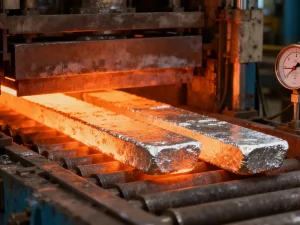
The aluminum 6061-T6 alloy is heated to a lower temperature, around 530 degrees Celsius. As I said earlier, aluminum 6061 consists of different alloy elements, i.e., silicon and copper. In T6, these alloy elements are mixed during the heating process. After heating, the aluminum T6 is allowed to cool.
Once this aluminum type cools, it then undergoes additional heat at a very low temperature of around 160 degrees Celsius. Aluminum T6 remains at this temperature for many hours, as this heat ages the aluminum and imparts strength. Remember, multiple heat treatments produce internal stress in this aluminum T6. However, manufacturers don’t use any additional stress-relief treatments for this type of aluminum.
2- Aluminum 6061 – T651
The aluminum 6061-T651 has the properties of T6. It means this aluminum alloy undergoes solution-based heating in the first step. During this heating, the alloy elements mix. However, this initial heating process produces stress that is not relieved in the T6 case. Right? However, T651 aluminum undergoes an additional stretching process.
In this process, the aluminum T651 is stretched to relieve internal stress. This stretching can increase the aluminum’s size by up to 2%. Once this internal stress is removed, the material then undergoes aging (common in T6). In this artificial aging, the T651 is heated at a lower temperature for an extended duration. T651 has very low internal stress as compared to T6.
3- Aluminum 6061 – T6511
Aluminum 6061-T6511 is another type, which is T651 with an additional step. Confused? Look, the T6511 aluminum alloy undergoes a heating and stress-relief process similar to that of the T651 type. However, these T6511 aluminum alloys face an additional step of straightening. This straightening is done using pressing. Manufacturers use this process to produce bars and rods for various industries.
If you remove this straightening process, you’ll get aluminum T651. However, if you remove the stress-relief treatment from T651, you’ll get T6 aluminum alloy. Remember, each of these three types differs with respect to one process. T6 involves a single heat treatment. T651 involves heat treatment (T6) and an additional stress-removal step. The last T6511 involved heat treatment (T6), stress removal (651), and straightening (1).
Terms to Remember in Aluminum 6061 T6 vs T651 vs T6511
Interestingly, there is a simple way to help you understand the details of each of these 6061 aluminum. Each of the types mentioned above is based on some alphabet and numbers. Here is the breakdown of those numbers or terms:
- T = It refers to the material (aluminum) that is heat-treated.
- 6 = 6 in these numbers represents the material (aluminum) that has undergone artificial aging. This process involves heating aluminum at a lower temperature but for a longer duration.
- 51= 51 indicates the material (aluminum alloy) has gone through the stress removal process.
- 1= 1 indicates the additional straightening process (through pressing). This process makes rolls and bars of 6061 aluminum alloys.
Differences Between Aluminum 6061 T6, T651, and T6511
In the section above, I have explained the basics of each type of 6061 aluminum alloy. Are you still confused about T6, T651, and T6511? Worry not, as I am going to discuss the key differences between these aluminum alloys. Understanding these differences will help you choose the right 6061 aluminum alloy.
Quick Highlight: These types (T6, T651, and T6511) are similar in many respects. For example, they have the same tensile strength (45000 PSI) and yield strength (40000 PSI). In the section below, I will only discuss the differences between these types of 6061 aluminum alloys. Those parameters not discussed below mean all of these types are the same in that regard.
1- Heat Treatment & Stress Relief

All 6061 aluminum alloys undergo heat treatment. However, the difference comes when it comes to stress removal (relief). T6, T651, T6511 – all these types undergo solution heat treatment. They are heated at higher temperatures and then cooled.
This heating and cooling create internal stress in them. After cooling, these types also undergo artificial aging at slightly lower temperatures. This step is common in all types of 6061 aluminum alloys. However, the T6 aluminum does not undergo stress relief. It means T6 steel has internal stress and can warp during cutting, bending, or fabrication.
The T651 undergoes stretching. This process increases the size of this alloy while also removing internal stress. Last but not least, the T6511 also undergoes stress removal and straightening processes. The straightening is done by a press process that further removes the residual stress left after stretching.
2- Stability & Machining
As I said earlier, T6 aluminum alloy undergoes heat treatment and artificial aging. However, it does not undergo any stress removal process. Remember, this internal stress is generated during heating and cooling. So, this T6 can warp and change shape when undergoing machining due to internal stress.
Therefore, I consider this type less stable in terms of machinability. On the other hand, T651 and T6511 undergo additional stress removal processes. Manufacturers remove internal stress by stretching, which increases their size. As a result, they don’t have internal stress, making them more stable for machining.
It is noteworthy that T651 shows slight stress even though it undergoes stretching. So, you should expect some warping during machining. However, the T6511 aluminum alloy undergoes stitching and then pressing (straightening). As a result, it has very low internal stress, making it exceptionally stable.
3- Surface Finishing & Availability
All of these 6061 aluminum alloys come with excellent surface finishing. They are smooth surfaces with no bumps or roughness. However, you won’t see any smooth shine on their surface. Manufacturers generally apply several coats of paint to enhance their visual appeal. You will notice tiny marks on T651 from the straightening process.
However, these marks are small and often negligible, not affecting the material’s overall feel. The game changes when it comes to the availability of these three aluminum alloy types. T6 aluminum alloys are available in sheets or plates with internal stress. The T651 aluminum alloys have more rolled plates, but with very minimal internal stress.
However, the T6511 aluminum alloys come in the shape of rods or bars (extruded). Remember, these shapes or bars are widely used in construction sectors. It is noteworthy that 6061 aluminum alloys are very popular and widely used across a range of industries. So, you won’t face any issues in their (T6, T651, T6511) availability in the market. However, the prices of the various aluminum alloys will vary.
4- Ductility & Formability
I won’t be wrong if I say that T6, T651, and T6511 have similar ductility. Want a more critical view of their ductility? If so, the T6 aluminum alloys are more ductile and softer than all other types. Why? The reason is that this T6 undergoes only heat treatment and aging. However, it faces no stress removal or straightening process.
Remember, both the stress-relief and straightening processes increase the hardness of the materials. Since the T6 does pass through these processes, it is less hard and offers decent ductility. Both t651 and 6511 are processed through the stress removal and straightening process and are very hard. You should choose these aluminum if ductility or formability is your priority.
5- Warp Resistance & Durability
The aluminum 6061-T6 offered does not undergo stress relief. As a result, this aluminum alloy retains internal stresses from heating and cooling. During cutting, internal stress can cause severe warping. As a result, you cannot make parts from this material with precision. The warping issue also affects the durability of this aluminum alloy (T6).
On the other hand, both T651 and T6511 undergo stress-relieving processes. Right? As a result, they have very minimal to low internal stress. So these materials are stable and can be cut, bent, and fabricated with ease. You will face very little warping in T651. However, there is no warping in T6511, as it undergoes both stress removal and straightening. So, there is zero internal stress, ensuring no warping issues. Both the T651 and T6511 are more durable than the T6.
6- Cost & Applications
As I mentioned earlier, these 6061 aluminum alloys vary in price. In fact, this is the most critical factor customers consider when choosing between T6, T651, and T6511. Interestingly, T6 aluminum alloys are less expensive than T651 and T6511. The reason is that this aluminum undergoes only a heat treatment process.
It does not undergo stress removal or straightening. Lower processing costs reduce the price of T6. Similarly, T651 is more expensive than T6 but less expensive than T6511. Why? The reason is that T651 undergoes a stress-relief process, which increases its cost. However, unlike the 6511, it does not undergo the straightening process, which makes it less costly than the T6511.
Here is the table showing a comparison of the applications of T6, T651, and T6511
| 6061-T6 | 6061-T651 | 6061-T6511 |
| Bicycle frames | Precision-machined parts | Extruded rods and bars |
| Marine fittings | Tooling plates and molds | Tubes and pipes |
| Automotive parts | Aircraft fittings | Structural frames |
| Frames and panels | Machine components | Architectural trims |
| Truck bodies | Jigs and fixtures | Aerospace extrusions |
Frequently Asked Questions
What is the difference between 6061 T6 and T651 vs T6511?
Aluminum 6061-T6 is a type that undergoes only heat treatment, is a bit softer, and is less expensive. It has internal stress, which is detrimental to its fabrication. Conversely, T651 undergoes heat treatment and stress-relief processes, making it well-suited for machining. However, the T6511 undergoes heat treatment, stress relief, and straightening. It is the most expensive and premium grade of 6061 aluminum alloy.
What is aluminum 6061 T6511?
It is a type that has no internal stress and is ideal for fabrication. Additionally, this type undergoes straightening. This process shapes the steel into bars or rods used in various sectors. It is one of the strongest aluminum 6061 types available in the market.
Is 6061 T6511 heat-treated?
Yes. T6511 undergoes the heat treatment similar to both T6 and T651. Its additional straightening process makes it different from T6 and T651. Like other types, T6511 also undergoes artificial aging at low temperatures.
Conclusion
Remember, 6061 aluminum alloy is preferred when strength and toughness are the priorities. However, this aluminum alloy comes in different types. These variations of 6061 aluminum are based on heat treatment and stress-relief processes. Those types include aluminum 6061-T6, T651, and T6511. Each of these aluminum alloy types offers unique properties and adds value in different ways. In this article, I have discussed all the fundamental differences between these types.