
 Deutsch
 Français
 日本語
 Español
 Italiano
 Русский
 繁體中文
 한국어

Milling machines are the must-haves for modern manufacturing. Right? These machines help in creating complex parts with exceptional precision. Horizontal and vertical milling machines are two popular types used today. Many differences spark debate over horizontal vs. vertical milling machines.
Interestingly, both machines use advanced CNC systems. So, they are matchless in precision, but the speed of these CNC machines varies. These milling machines are standard in many industries. In this article, I will talk about the differences between horizontal and vertical milling machines. So, let’s begin!
Overview of Horizontal & Vertical Milling Machine

Before we discuss differences, let’s start with the basics of these milling machines.
Milling machines cut, shape, and form different parts with precision. These machines have rotating cutting tools that cut the workpiece. This workpiece remains stationary on the milling machine’s worktable. The cutter (on the spindle) moves as instructed, cutting the workpiece with precision.
These cutting tools are present on the spindle of the milling machine. It is noteworthy that the spindle is attached or connected to the motor of these machines. This motor powers those spindles and rotates. When the spindle rotates, the cutting tools on it cut the workpiece with precision. Got this idea?
These horizontal and vertical milling machines differ in the orientation of their spindles. In a horizontal milling machine, the spindle is present in a horizontal position. So, it moves left to right (sideways during the machine’s operation). In a vertical milling machine, the spindle is located vertically and moves up and down.
This orientation of the spindle creates differences between these horizontal and vertical machines. Remember, horizontal milling machines are faster but larger. On the other hand, vertical milling machines are slower, but compact, less effective, especially for deep cuts. Both of these milling machines come with unique value propositions.
Differences Between Horizontal and Vertical Milling Machines
In the section above, I discussed the basics of these two milling machines. However, differences between these machines make them suitable for different machining operations. In the section below, I will discuss the key differences between HMM and VMM.
1- Working Principle & Spindle Orientation
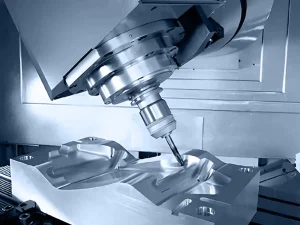
The working of all the milling machines is the same. They have cutting tools that remove material from the workpiece to cut and shape it. However, these two milling machines differ in how their cutters operate. As I mentioned earlier, horizontal milling machines have spindles that are positioned horizontally. When you switch on the machine, the motor powers the spindle, which moves in a horizontal orientation.
So, the cutter moves sideways to cut the workpiece. Remember, cutters are mounted or present on the spindle. On the other hand, vertical milling machines differ because their spindles are vertically oriented. The cutting tools (cutter) move up and down to cut or shape the workpiece. During this machining, the workpiece remains stationary on the worktable.
2- Ease of Use & Workpiece Size
I consider vertical milling machines to be easy to use, especially for beginners or small workshops. Why? The reason is that the setup of these VMMs is simple, and the operator can easily see the cutting area. Additionally, adjusting the table and monitoring the cutting process are possible. So, the operators can easily adjust if these VMM make any mistakes.
On the other hand, horizontal milling machines are very complex to operate. They require proper skill and training for operation. Remember, these horizontal milling machines are suitable for heavy-duty tasks. Additionally, these HMMs can handle larger and heavier workpieces with ease. Additionally, the excellent position of the spindle allows the cutters to make deep cuts with ease.
Quick Highlight: Vertical milling machines struggle with deep cuts. Remember, the cutters move up and down, which is less appreciated than cutter movement for deep cuts. In fact, cutting tools have to work harder to cut even a bit thicker materials. On the other hand, HMMs are very strong and can cut even thick metal blocks.
3- Cutting Speed
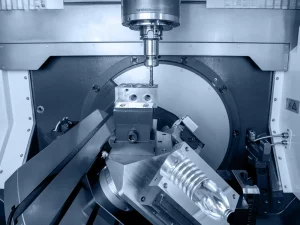
Horizontal milling machines are high-speed. They offer a higher cutting speed compared to vertical ones. Why? The reason is that these HMMs come with powerful motors and sturdy construction. So, these machines can use multiple cutting tools (blades) at once. As a result, they can remove more material in less time — increasing the speed of these HMMs.
In contrast, vertical milling machines have slower cutting speeds. However, these machines offer excellent precision and accuracy that you don’t get with HMM. So, there is a trade-off between speed and accuracy. If you want more precision in the milling operation, I recommend choosing VMM. However, if speed is your priority, the HMM seems the best option.
4- Project Size & Lead Time
I favor horizontal milling machines for bigger projects. The reason is that these machines are rugged with a strong frame and can cut the workpiece quickly. Additionally, their strong motor provides enough power for tools to cut thicker metal blocks. Additionally, the HMM can use multiple cutters to promptly remove large amounts of material.
So, these machines (HMMs) can complete larger projects more quickly, thereby reducing lead times. On the other hand, vertical milling machines are excellent options for smaller projects. Remember, these machines (VMM) are slow, but they will complete the smaller project with 100% precision and accuracy. You should not use VMM if you need to complete cutting tasks quickly.
5- Chip Removal and Surface Finish
Chip removal is more efficient on horizontal milling machines. How? As I said earlier, the cutting tools move sideways in these HMMs. During cutting, these tools remove chips and push them away from the machines. No chips remain on the machine bodies, ensuring cleaner machining. On the other hand, VMM has cutting tools moving up and down.
So, they remove the chip, but cannot throw it away. So, these chips accumulate on the bodies of these vertical milling machines. The operator had to clean these chips after the milling operation when the switch was off. Remember, horizontal milling machines create excellent surface finishes, especially at high speeds. The VMM produces rough cuts and less-smooth finishes, especially when the material (workpiece) is thicker.
6- Size & Weight
I consider the VMM a superior option for size and weight. These machines are compact and require less space in workshops. It means you can keep these vertical milling machines even in a small or tight space. Additionally, their low weight ensures these VMM machines are portable and can move from here to there.
On the other hand, the HMMs are bulkier and their weight is too high. Due to their larger size, these machines require more space. If you have a small workplace, these HMMs are not the best option. Additionally, their heavier weight is another significant problem. Moving these HMMs can be very challenging. You have to keep them in one place for CNC machining operations.
7- Setup & Maintenance
As I said earlier, vertical milling machines (VMMs) are the simplest ones. In fact, someone with gentle machining experience can easily set up and operate these machines. The working of VMMs is easier, and you can easily understand the operation of their spindle and table. Additionally, these machines cut lighter materials, so their wear and tear is less likely.
On the other hand, horizontal milling machines (HMMs) require a complex setup. They involve multiple complex steps, including mounting the workpiece, aligning the cutters, and so on. Additionally, these HMMs use more power, cut thicker material, and can wear out quickly. During machining, HMM components can be damaged. All these factors demand regular maintenance in these horizontal milling machines.
8- Cost & Application
Interestingly, the vertical milling machines (VMMs) are generally much more affordable. The beginner-friendly setup with affordable pricing makes a perfect combination. These VMMs use fewer components, reducing maintenance costs. Due to these factors, they’re an ideal choice for a small workshop.
These machines (VMMs) are suitable for machining projects where precision is the primary priority. On the other hand, the horizontal milling machines are premium and very expensive. They are ideal for large-scale projects that require faster turnaround. Here is the table showing the application comparison of horizontal and vertical milling machines:
| Vertical Milling Machine (VMM) | Horizontal Milling Machine (HMM) |
| Small, precise parts | Large, heavy parts |
| Prototyping & toolmaking | Mass production |
| Light-duty cutting | Heavy-duty cutting |
| Workshops & labs | Industrial plants |
| Light cuts (less deep) and slots | Deep cuts, heavy material removal |
Frequently Asked Questions
What are the advantages of a horizontal milling machine?
Horizontal milling machines offer many benefits, including:
- Faster speed
- Versatility in terms of material
- Helpful for completing large projects
- Very powerful cutters that can create deep cuts.
What are the advantages of a vertical milling machine?
The vertical milling machines offer some benefits, including:
- Excellent precision and accuracy
- Cost-effective (Less initial cost of machines)
- Lower maintenance cost of vertical machines
- The setup and overall operation of the vertical milling machine are simple.
What type of materials can I use in horizontal and vertical milling machines?
Both of these milling machines can use the same type of materials. Those include stainless steel, brass, titanium, and copper, among others. There is no difference between these milling machines in terms of material compatibility.
Conclusion: Which One Should I Choose, Horizontal or Vertical Milling Machine?
There is no one fit for all when it comes to horizontal vs. vertical milling machines. Why? The reason is that the two machines serve different needs. Do you need precision and willing to compromise on speed? In such a situation, I recommend choosing vertical milling machines.
These machines can easily handle small projects and achieve excellent accuracy. However, the horizontal milling machines are a premium option for large projects. They will help make parts from thick metal blocks in no time. The final selection of these milling machines depends on your specific use cases and preferences.